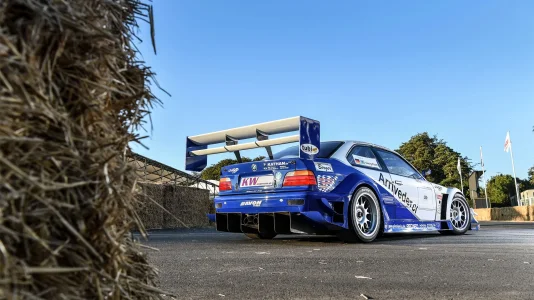
BMW E36 Judd V8. Image: KW Suspensions

Some racing engines are remembered for the championships they won, but others are remembered simply for the noise they made. Judd undoubtedly belongs in the latter category.
Mention the name to anyone who has stood trackside at Le Mans, Goodwood or a historic Formula One event, and they will probably smile before saying a word. The shriek of a Judd V8, V10 or V12 is one of motorsport's most recognisable sounds.
Yet despite becoming one of the most respected names in motorsport engineering, Judd has never been a household manufacturer. Instead, it carved out a reputation as the engine builder that private teams trusted when they needed power, reliability and world-class engineering to take the fight to the likes of Ferrari and McLaren.

John Judd and Sir Jack Brabham started the company in 1971. Image: juddpower.com
In its early years, Engine Developments earned its reputation by rebuilding and maintaining the iconic Cosworth DFV, but it wasn't long before the company was creating engines of its own. Honda soon came calling, with Judd helping develop Formula Two engines before contributing to the Japanese manufacturer's CART programme. Those projects laid the foundations for what would become one of the most respected independent engine companies in the world.
Nigel Mansell gave the company its first Formula One podium with a second-place finish at the 1988 British Grand Prix, while the following years saw Judd-powered cars consistently exceed expectations.
Perhaps one of the best-sounding engines ever built and used in Formula One: the Judd EV 3,496 cc V8.
Perhaps the most memorable performance came at the 1990 French Grand Prix, where Ivan Capelli's Adrian Newey-designed Leyton House March led much of the race before eventually finishing second to Alain Prost's Ferrari. It wasn't a victory, but it remains one of the greatest drives by an independent Formula One team in history, and one that Judd would be at the centre of.
Judd later partnered with Yamaha to develop Formula One engines throughout the 1990s. Although wins never arrived, the collaboration produced several standout performances, including Damon Hill's unforgettable near-victory for Arrows at the 1997 Hungarian Grand Prix.

Judd's HK V8 LMP2 championship-winning competition engine. Image: juddpower.com
Factory efforts came and went, but Judd remained a constant presence in the paddock. Its V10-powered prototypes became favourites among fans, not just because they were quick, but because they sounded unlike anything else on the grid. Even as turbocharging became the norm, many enthusiasts continued to regard the Judd V10 as one of the greatest-sounding racing engines ever built.
Although an overall Le Mans victory remained just out of reach, Judd-powered cars collected podium finishes, class wins and championships across endurance racing's biggest series.
Judd later worked with MG on its BTCC programme, once again demonstrating that its engineering expertise could be adapted to almost any motorsport category.
Without the backing of a major manufacturer, the company built engines capable of competing against some of the biggest names in motorsport. More importantly, it gave countless private teams the opportunity to fight well above their weight. For many fans, though, Judd's greatest contribution is not found in a statistics book, but rather the memories of that incredible howl.

Victory at the 2002 Daytona 24 hours. Image: juddpower.com
Everything from remanufacturing classic parts for older engines to keep them alive, right up to pitlane support for teams. Judd is still a present force in modern motorsport!

Judd's CAD work is a marvel to behold for us amateurs.
The approachability of Judd's services is fantastic, you can write to them for pretty much anything related to their engines. They will be able to help in some way. There are so many fantastic reviews of the company online from small independent hillclimb teams who use their modern V8 or V10 in their cars. It is great to see a company still upholding the same high standards it had when it was founded!
The car has extremely short gears to make it as efficient a hillclimb car as possible, so some setup tuning is required to use it effectively on a normal circuit, but the tinkering is definitely worthwhile!

Image: KW Studios via Instagram
The scream from that V8 is unlike anything else, and it's a car we at OverTake love and always come back to when we load up Raceroom!
What do you think about Judd and their history in motorsport? Do you have a favourite car you love to drive in a sim that has a Judd engine? Let us know in the comments down below!
Mention the name to anyone who has stood trackside at Le Mans, Goodwood or a historic Formula One event, and they will probably smile before saying a word. The shriek of a Judd V8, V10 or V12 is one of motorsport's most recognisable sounds.
Yet despite becoming one of the most respected names in motorsport engineering, Judd has never been a household manufacturer. Instead, it carved out a reputation as the engine builder that private teams trusted when they needed power, reliability and world-class engineering to take the fight to the likes of Ferrari and McLaren.
John Judd and Sir Jack Brabham started the company in 1971. Image: juddpower.com
In its early years, Engine Developments earned its reputation by rebuilding and maintaining the iconic Cosworth DFV, but it wasn't long before the company was creating engines of its own. Honda soon came calling, with Judd helping develop Formula Two engines before contributing to the Japanese manufacturer's CART programme. Those projects laid the foundations for what would become one of the most respected independent engine companies in the world.
Taking On Formula One
When Formula One moved away from turbocharged engines in 1988, Judd saw its opportunity. Its naturally aspirated CV V8 quickly found homes in several teams, including Williams, March and Ligier. Against manufacturers with significantly larger budgets, simply making the grid was an achievement, but Judd regularly proved it could do far more than just make up the numbers.Nigel Mansell gave the company its first Formula One podium with a second-place finish at the 1988 British Grand Prix, while the following years saw Judd-powered cars consistently exceed expectations.
Perhaps the most memorable performance came at the 1990 French Grand Prix, where Ivan Capelli's Adrian Newey-designed Leyton House March led much of the race before eventually finishing second to Alain Prost's Ferrari. It wasn't a victory, but it remains one of the greatest drives by an independent Formula One team in history, and one that Judd would be at the centre of.
Judd later partnered with Yamaha to develop Formula One engines throughout the 1990s. Although wins never arrived, the collaboration produced several standout performances, including Damon Hill's unforgettable near-victory for Arrows at the 1997 Hungarian Grand Prix.
Where Judd Really Found Its Voice
If Formula One introduced Judd to the world, endurance racing cemented its legacy. During the 2000s, its engines became a familiar sight, and more importantly, sound at the 24 Hours of Le Mans. Privateer teams such as Pescarolo Sport, Rebellion Racing, Zytek and Oreca all turned to Judd power.Judd's HK V8 LMP2 championship-winning competition engine. Image: juddpower.com
Factory efforts came and went, but Judd remained a constant presence in the paddock. Its V10-powered prototypes became favourites among fans, not just because they were quick, but because they sounded unlike anything else on the grid. Even as turbocharging became the norm, many enthusiasts continued to regard the Judd V10 as one of the greatest-sounding racing engines ever built.
Although an overall Le Mans victory remained just out of reach, Judd-powered cars collected podium finishes, class wins and championships across endurance racing's biggest series.
Super Touring Success
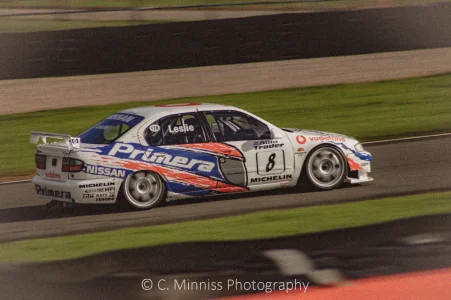
Formula One and Le Mans may have made Judd famous, but the company never limited itself to those disciplines. It also played an important role in touring car racing, developing Nissan's Primera engines during one of the manufacturer's most successful periods in the British Touring Car Championship. Nissan claimed back-to-back manufacturers' titles in 1998 and 1999, while Laurent Aïello secured the drivers' championship in the latter season.Judd later worked with MG on its BTCC programme, once again demonstrating that its engineering expertise could be adapted to almost any motorsport category.
A Legacy Built on Engineering
The motorsport landscape has changed dramatically since Judd first appeared on the Formula One grid. Today's racing is increasingly dominated by factory programmes, hybrid systems and budgets that independent teams can only dream of. That makes Judd's achievements all the more remarkable.Without the backing of a major manufacturer, the company built engines capable of competing against some of the biggest names in motorsport. More importantly, it gave countless private teams the opportunity to fight well above their weight. For many fans, though, Judd's greatest contribution is not found in a statistics book, but rather the memories of that incredible howl.
Victory at the 2002 Daytona 24 hours. Image: juddpower.com
What is Judd Doing Now?
Today, Judd is still building and maintaining its fleet of legendary engines. The brand is still plastered across plenty of series worldwide, but the net is being cast further afield to ensure it survives what is a really turbulent time for most ICE engine manufacturers.Everything from remanufacturing classic parts for older engines to keep them alive, right up to pitlane support for teams. Judd is still a present force in modern motorsport!
Judd's CAD work is a marvel to behold for us amateurs.
The approachability of Judd's services is fantastic, you can write to them for pretty much anything related to their engines. They will be able to help in some way. There are so many fantastic reviews of the company online from small independent hillclimb teams who use their modern V8 or V10 in their cars. It is great to see a company still upholding the same high standards it had when it was founded!
Special Mention: The BMW 134 Judd V8
Judd-powered cars in sim racing are plentiful, whether from first-party content or mods. However, one car sprang to mind before any other: the BMW 134 Judd V8 in RaceRoom. Georg Plasa's 134 Judd was built for the 2011 European HillClimb Championship, but this F1-derived hill-climb car makes one of the best noises available in RaceRoom and is a real handful to drive.The car has extremely short gears to make it as efficient a hillclimb car as possible, so some setup tuning is required to use it effectively on a normal circuit, but the tinkering is definitely worthwhile!
Image: KW Studios via Instagram
The scream from that V8 is unlike anything else, and it's a car we at OverTake love and always come back to when we load up Raceroom!
What do you think about Judd and their history in motorsport? Do you have a favourite car you love to drive in a sim that has a Judd engine? Let us know in the comments down below!